Imagination needs inspiration to bloom.


Visar inlägg med etikett British. Visa alla inlägg

2016/03/02

Forensics: What bugs, burns, prints, DNA and more tell us about crime by Val McDermid

After countless cases, many of them investigated by the character Tony Hill, Val McDermid decided to write a book about the true forensic science. She takes us behind the barriers at a crime scene, explains forensic science and how autopsies are done. The book deals with entomology, forensic medicine, toxicology, fingerprints, blood traces, dna-profiling, forensic sculpture, face reconstruction, digital criminal science and forensic psychology, and the author uses an interesting approach. Interviews with experts in the field and murder investigations from all ages are used to show the development of forensic science in the last 200 years, and it is fascinating. Among many, there is a story about a physician that murdered approximately 210 patients, two bodies found in 30 packages and a spy found dead in a trunk. Experts on everything from flies and larvae to poisons try to map the circumstances to understand what has happened, so the police have greater chances of finding the person responsible.

The book is repulsive, occasionally, but very fascinating. It shows us an entire world that the public, generally, isn’t allowed to enter. A meticulous work where details might mean the different between life and death.

An interesting fact is the author’s critical approach to forensic science. She describes an immense belief in evidence, both by the judicial system and the public. Experts testimonies in court depend much on their experience, reconstructions and interpretations. Furthermore, in court the attourneys and prosecutors often discusses juridical matters instead of seeking the truth, and might use the testimony as they choose. Since dna-profiling, or genetic fingerprints, was first used in investigations in the 80’s, 314 people being sentenced have been freed, only in the US. Dna has had an immense impact, just as physical fingerprints had in the beginning of the 1900’s. But not even dna-profiling is totally reliable. Contamination happens, and even the refined dna-profiling technique, LCN, where a microscopic quantity of dna is copied, has its flaws. Forensic consists of science and the human factor.

One of the most important themes in the book is the author’s discussion about the fact that the progress of science constantly forces us to a standpoint where ethic and morality is concerned. In forensics, the mapping of genetic material and research of genes that increase the risk of becoming a criminal, restrict the individual integrity and it is almost impossible to garantee that information is not misused. This kind of questions are important to contemplate. Today, we have to consider the risks of technology such as the current surveillance and the development of artificial intelligence.

Those who have seen the tv-series CSI, Crime scene investigation, might be a little disappointed when reading the book. CSI might have increased expectations when it comes to forensic science, but on the other hand, it might have awaken an interest and curiosity among the public. Those who understand the difference between fiction and reality and want to know more about forenic science will have many questions answered. Unfortunately, there could have been more information about different procedures and how they work. But the author covers many parts of forensic science and this is a way to discover the forensics.

In a time when detective fiction and murder mysteries fill the shelves in the book stores it is interesting to plunge into the real work, where there are as many mysteries. Forensic science is astonishing and the reality often exceeds poem.

2015/12/18

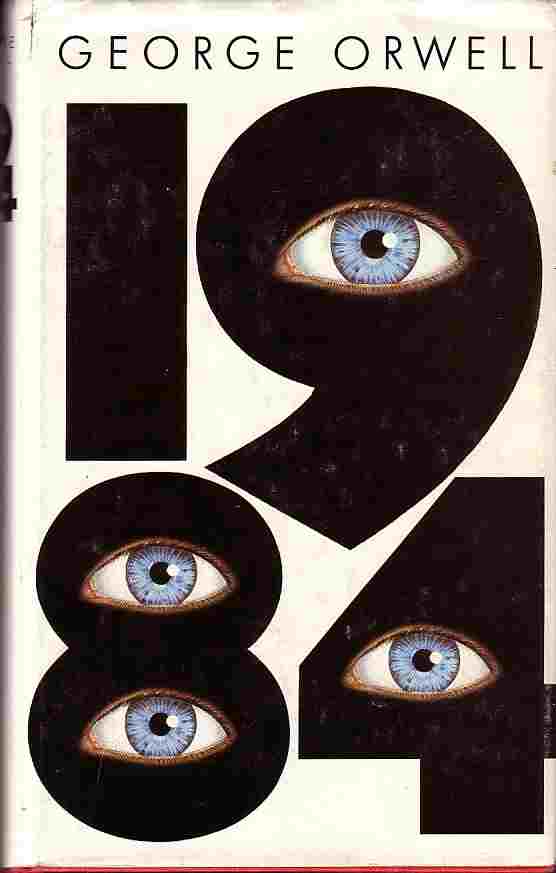
1984 by George Orwell

George Orwell’s prophecy concerning the development of society is both frightening and thought provoking. In his dystopian novel, Orwell, or Eric Arthur Blair as his real name was, predicted how the world in 1984 would be like. The book was published in 1949, in the aftermath of world war two, and has a lot of influence from the communists and nazi rule at the time.

There are themes like big brother, relativism, surveillance, collectivism, freedom, reality, manipulation, indoctrination and the biggest threat of all, love. The communist idea that the individual is replaceable, a casualty, while the system is important, is a big theme. At the same time, the system rests on the people, and therefor it is important to control them. There is no freedom of speech or even thought. The thought police arrests everyone that protest against the truth. The massive surveillance controls the people. Even though Orwell doesn’t take it as far as Karin Boye’s Kallocain, with the truth serum with the same name, he lets the thought police be able to read face expressions and tones of voice. The least deviant gets arrested and probably killed.

According to Orwell, there are four ways to bring down a totalitarian state, and in most cases it is a flaw in the system itself, or the powerful people behind it, to make it possible to overthrow. This is where this book becomes not only frightening, but disturbing. Orwell shows us that it is possible to control an entire population, and diminish the risk of being destroyed. He has thought of everything, using the mistakes of earlier dictatorships, forming a flawless oligarchy. The main character, Winston Smith, a member of the Outer party, works for the Ministry of Truth, where history is rewritten all the time, which causes a great confusion and loss of orientation, preventing people from learning, getting inspired of other people, and making comparison with other believes impossible. If all information is constantly changed, and there is no way of confirming one's memory, what is the truth, then? If you are the only source, can you be sure the information is correct? Can you trust your own mind, your memory?

Another factor for a strong oligarchy is the power of language. How words make thoughts possible. In Oceania, the political party is restricting the language through a new way of speech, without words like freedom and democracy. A restricted language means unthinking, unintelligent individuals.

The scariest part of the book is the control from within. There can be no love besides the love for Big Brother, hence the sexualpuritarism. The system is above the individual, and relationships between people are unnecessary, even a liability. The children being the worst spies reminds me of the witch hunt in the 18th century. Children don't understand the seriousness of their deeds. For them, it's just a game, and they are rewarded for it. They never learn to love their parents as their parents love them. Therefor, they don’t mind reporting them to the authorities. This totalitarian ideology depends on children scaring people and helping the system, never trusting the population. The children are brought up to be hooligans, and are justified by the ideology. The part of justifying a certain behaviour that is not humane is not totally uncommon today, when governments justify wars. The simple idea that there are two sides and the other one is always wrong is a way of uniting people. When returning from a war, soldiers are treated like heroes, despite the damage they have caused. 
Oceania constantly changes enemy. Just as in the fictional world, the winner writes history, which is a kind of censure function, and yesterday's hero might end up tomorrow's enemy. In that way, it is relevant today. It emphasizes general structures and values to an extent where they become visible and easy to question.

The proles, the ordinary, poor people that don’t belong to the political party, are not so different from us. They are easy to manipulate and not in need of indoctrination. They live simple lives with hard work, family life, sports, beer, gambling and fighting with neighbours. In what way do they differ from us? Are we not easy to control because we are busy working and consuming products that are advertised, seldom evolving into more spiritual, philosophical individuals that might discover and question flaws in the society? According to Orwell, the people that knows what really happens are the ones who are least able to see the world as it really is. The people who have information are unable to face it. The more insight, the more delusion. The powerful people in the book that know the situation, and that Oceania will never win or loose the war, are the ones who believe it the most. I wonder whether that is true for the real world, as well.

The totalitarian machine does not just oppress people. It makes them oppress themselves. Through the terms dubblethink and thoughtcrime, people repress their memories and force certain opinions.

Orwell wasn't right in his prediction about a totalitarian society taking place in 1984, not in the western world, but he was right in some cases. The dystopian novel is very disturbing to read, because in a way, the book is more relevant today than ever. We are being watched, our telephone calls are being monitored, and we leave fingerprints everywhere on the internet. Is it possible to be free? What is freedom?

2015/11/26

Romeo and Juliet by William Shakespeare

Being one of the most famous plays through all time, Romeo and Juliet still captivates readers and audiences around the world. This is a fine example of the fact that time doesn't really have to change us. We can still understand and identify with great stories from a long time ago. Romeo and Juliet is a play that centers around forbiddem love between two young, rebellious people. But the play is much more than that.

There are some parts that would need some explaining. The reason for the long lasting war between the families is never explained. Perhaps it's not important, but it would be interesting to know what caused this hate. Another detail is the age of the star-crossed lovers. They are so young. Is it possible to know and understand love at that age? Especially when just having met the person? Romeo seems to have been as romantically absorbed just some days earlier, and he got over Rosaline fast. Could it, in fact, be more about sexual attraction than real love? Or is that to destroy on of the most romantuc plays of all time? Just some thoughts.

Never the less, it is a strong play with so much emotion and a wonderfully written. It alternates between different forms, some of it rhyme. Those parts are really beautiful. Although, I think some of the beauty gets lost in the translation of such a work. This is a new Swedish translation, and some words just seem misplaced. Even though the prose evolves and changes through time, it still has to fit into a 16th century enivronment.

Everything happens so fast, which is rather common for plays. Deciding to kill, die or love takes a fraction of a second. Why not think everything through for a while? It would have been nice with more of the inner dialogues to follow the characters thoughts leading to their decision. I have not seen the play on stage, perhaps it's different.

This play is about so much more than unconditional love. It is about a difficult world with tough love. It is about parents that choose their daughter's future, and it is about refusing to live one's life on others' terms. Most of all, it is, although tragically and at a very high price, about choosing independence. This play comes alive and really moves and affecte its readers. Perhaps because it is easy to understand the young couple's difficulty that drives them out of this world. It tells us much about women as properties and merchandise, and the consequences when ignoring their opinions and needs. In one way, it is still relevant. Many parents still have their children's future decided even before they really know them. Perhaps it is to take over the family business, going to college or marry someone from the same country or religion. Romeo and Juliet defy their destinies, and take power over them.

A commentary chapter contains a discussion by the translator about underlying themes and structures of the book, including the balance between the families, this rivalty about power. The peace of Verona rests upon this symmetry - almost like a stalement - where none of the families can win. A marriage between Juliet, a Capulet, and Paris, a relative of the emperor, would brake the power balance between the Capulets and the Montagues. Romeo's and Juliet's love, born from hate between their families, is what finally restore peace in Verona. That is what is tragic and beautiful. Two young people are sacrificed on the altar of peace.

2015/11/12

My brief history by Stephen Hawking

Stephen Hawking, one of the most famous physicists and researchers in cosmology in the world, tells the story of his life in this book. Did you know that he is self learned when it comes to maths? Or that he wasn't happy when his little sister was born? This book includes information that shows the man behind the success.

What made him interested in science and so successful? As a young boy, he was fascinated by systems and wanted to control them. He used to take apart items to see how they worked, but couldn't set them back. Theory has always been his field, not the practical part. But solving the greatest mystery of all, the system of the universe, was a way of controlling it, he thought. That became his subject.

His family was not rich with a lot of possibilities. They had to think about money. He spended several summer holidays in a wagon previously owned by roamers. His father built bunks with stretchers from the second world war. His father came from a poor family and was very economical, refusing to turn on the central heat, and instead putting on several layers of clothes. He also seems to have been a very determined person. He was a doctor and his research was focused on tropical illness and meant a lot of traveling. During his time in India he refused to eat Indian food and hired a former chef in the brittich army that cooked english food.

Stephen Hawking is a fascinating person. He is self learned when it comes to mathematics. He is a math professor, but has no formal education in mathematics after his time at St. Albans where he read some maths as a seventeen year old. How could anyone be able to learn such complicated math by himself? He later tutored students at Cambridge and made sure to be one week ahead of the syllabus. 

He got scholarship and began at Oxford after St. Albans, as a seventeen year old, and the others in his class had done military service and was much older. The mentality at Oxford is interesting - either you were so talented and intelligent that you didn't have to study, or you should accept your incompetence and get bad grades. If you worked hard to achieve good grades, you were a so called grey man. During his three years at Oxford, Stephen Hawking took a test before staring there, and the final exams before getting his degree. He started as a research student at Cambridge 1962.

When 21 years old, he got the diagnosis ALS and learned that he had two year left to live. Having met Jane Wilde around the same time, he started to work hard for the first time in his life, to get a job and be able to marry her.

The first half of the book is very interesting. Then, something happens in the book. Stephen Hawking leaves the story of his life and delve into the world of time like curves, singularities and black holes, which doesn't fit in a biography, but perhaps another book. Then he wrote A briefer history of time, and at first, the publisher made him simplify some of the content so a regular reader would understand it, before it was published. That book is understandable and interesting. What's not understandable is this book, this transition from biography to facts about time travel. But probably, physics is a part of him and he is a part of physics.

Except that, the book is written straight forward, without much digressions. Stephen Hawking uses a matter of fact-tone. He is not much for shape and dramaturgy, but tells the story straight out, and that makes the book somewhat uneven. It contains much about his achievements and conferences around the world, which is fine, but it would have been interesting to learn more about him, his family and his struggle with life. He got two more years, but is still alive today, and continues to captivate a whole world.

2015/08/08

How to be a heroine by Samantha Ellis

Samantha Ellis has chosen a magnificent concept for her new book. Literature has had a great impact on her and she has used characters to understand her own life and find solutions. The book mixes characters from different books and time periods, and Ellis herself is one of them. Her own life is woven into the fabric. The reader gets to know how her parents wanted her to marry a Iraqi-Jewish man. How she struggled to be able to leave her home and go to Cambridge – where Sylvia Plath once studied.

Ellis prefers different heroines in different periods in life. In The Bell Jar, Esther Greenwood made her believe that suffering has a value. Her biggest heroine is her mother that left her home in Iraq and moved to a new world. But, eventually, when she herself was struck by a disease, she realized that suffering has no value. She was neither stronger nor more humble. It's interesting to follow Ellis personal development and how it changes her view of the characters.

Occasionally, she returns to the sisters Brontë's characters. It seems that Cathy and Jane are competitors and she has to choose one of them. Why can't both be heroines? Why can't she understand right away that she needed one in her early life and now identify with the other?

It's a book from a feminist perspective. Samanatha Ellis prefers heroines, not passive girls. She likes characters on adventure, that challenge themselves and overcome their fear. That becomes independent individuals and refuse to be governed. She question why Ariel sacrificed her voice to meet a man, or why Anne Shirley stopped writing when she married.

The book is well-written. Books about literature tend to have a hypnotic effect on those interested in literature, especially if it's well written. You learn much about books and how to use them for your own good. You get tempted to read many new ones and form your own opinions. You run the risk of becoming even more interested in literature.

Samantha Ellis take the heroines from the books and make them her friends, in a fascinating way. At one time, in the bad tube, she gathers all the characters to a reunion. Only the imagination is the limit.

2015/01/03

Arcadia by Tom Stoppard

Philosophy vs science progress. What is more important to mankind? What makes us happy? The play Arcadia (1993) is set in a country house, Sidley Park, in Derbyshire, and follows the lives of people living there in the 1800's and present day.

The play is rich and complex. Stoppard explores many different themes and contrasts such as past and present, and order and disorder. They melt together and show that everything is connected. The story offers more questions than answers. It involves philosophy, history, classic literature, mystical poets like Lord Byron, landscape design, murder speculations, population dynamics, mathematical algorithms and thermodynamics. And everything comes together perfectly. Some of the characters even investigate science that challenges Newton's theories of physics. It's very interesting for people with great curiousity. 

The play also investigates the meaning of certainty, the nature of evidence and truth in modern ideas about history, mathematics and physics. Clues from the past can be interpreted in different ways. And because they can't be proven to be false, does that mean they are true? Is truth the necessary opposite of false? The characters are struggling with this problem when they are thinking about history and time. Much of the play centers around time - research about history and attempts of predicting the future with an equation, and the exceptions that make it impossible. They discuss the hypothetical theory about the prediction of the future being prevented by irregularities such as sex. Perhaps love is the exception of the rule, which makes the future so difficult to predict. The disorder in feelings, the contrast, or perhaps the connection, of passion and madness, is a kind of practical example of chaos theory. The concept of order vs chaos theory is explored in different ways, both in personal feelings and physical disorder (the table in the center of the room that collects objects from both time periods). The characters' social order moves into chaos, where time is depicted as a kind of illusion. However, there might be order in chaos, perhaps we are incapable of perceiving it because our lack of knowledge.

There's a tragic theme of smallness, universal insufficiency and the life going in one direction. Despite Newton's equations that goes both ways, there are certain events that are irreversible, like time, and fire and heat (the second law of thermodynamics), as well as the cooling universe and burned relationships. But the characters in the 1800's are living on in descendants and letters. Life is eternal, and at the same time, it is the exception of the rule. Stoppard paints this picture splendidly. When there's chaos, there are no longer any rules, and the different eras intermingle. The structure of the play is a work of art itself.

Last but not least, every theme is evolving from the source of love and death and it's both tragic, comical and thrilling. And regardless of time they think and reflect. This is a play for people not wanting to be served answers, but prefer to interpret and form their opinions along the way. Answers are not important. Conversation is. So, connecting the dots, philosophy or science progress, reflection or knowledge? When the characters face a dark future, and when the world is doomed – due to chaos theory - they turn to music and waltz. So, perhaps that is one answer to the question about what's more important to mankind?

2014/12/04

The Vampyre by John William Polidori

"The Vampyre",  published 1819, is considered the first vampyre story in English literature and the one turning the vampyre folklore into the classic tale, the mythical vampyre into the aristocratic, cultivated, intellectual and seductive creature. A young man, Aubrey, becomes fascinated with the mysterious Lord Ruthven that has entered London society. They travel to Rome, but Aubrey leaves Lord Ruthven due to certain circumstances. The next time they met, Aubrey's view of him would change irrevocable.

In this short story, the vampyre isn't charming as in later stories. He's egoistical, sadistic, ruthless and without empathy. He doesn't want to be a nice person. He wants to use people for his benefit. He is very generous when giving to people, with the seemingly good purpose of charity, but only to people that will use his money to end up in an even worse situation.

A great issue for Aubrey is whether to keep his word or save the one he cares about - which can seem absurd since most people would break their promises to save their loved ones. A word isn't always that much worth today. Back then, giving someone your word was probably something highly valued and irreversible.

There is not so much character development, as in many short stories, but the main characters are very interesting. Despite an almost non-existent dialogue the prose isn't heavy at all. The story is thrilling and Aubrey's anxiety and fear are felt by the reader.

This short story is immensely influential. It began in the early 1800's when the author elite - Lord Byron, Percy and Mary Shelley, and Claire Clairmont - came together at the Lake Geneva in Switzerland. Among these authors were Byron's physician, John William Polidori. They decided to write a horror-story. This is a historical moment. Lord Byron and Percy Shelley discarded their stories, perhaps because they thought nothing could compare to poetry. Mary Shelley wrote "Frankenstein" and Polidori used Byron's discarded attempt and wrote "The vampyre". Thus, this story is a work by both of them, and furthermore, the characters Lord Ruthven and Aubrey are based on Lord Byron and Polidori. Neither of them wanted it to be published, but nevertheless, it was.

It's impossible to describe the impact these people had and still have on authors and readers. What did they talk about? What fascinated them? These works of literature are only a small part, a tiny glimpse, of their strong imagination.

2014/11/25

Vathek by William Beckford


The Caliph, Vathek, and his mother, Carathis, are cruel and ruthless in their search for knowledge and supernatural powers. Listening to Giaour, who claims to be an Indian merchant and has earned Vathek's attention, they abandon their faith, Islam, to live in sin and murder innocent people to sacrifice to Giaour - who work for the Devil, Eblis, and whose name means blasphemer - to be able to achieve these powers. Of course, it's not that easy.

Written in 1786, by the English author William Beckford, "Vathek" is one of the first gothic novels. One might view the book as a moral tale, or just a fascinating story about abandoning reason and empathy to achieve a goal that perhaps is superfluous. At the same time, the negative view of thirst for knowledge - apart from the cruel crimes committed to achieve it - is interesting.

Being a great inspiration to many authors, the expectations might be high. Unfortunately, the book, which is only 120 pages, is a heavy read and the character development, except from the main characters - is almost non-existent, which makes it difficult to maintain interest.

2014/10/25

The Thirteenth Tale by Diane Setterfield

The main character, Margaret Lea, amateur biographer and daughter of the owner of an antiquarian book shop, receives a request from a famous author, Vida Winter. The author is ill and wants Margaret to write her biography, which is confusing considering Winter's habit of fabricating her life story during interviews with journalists. Naturally, Margaret wonders why she would tell the truth this time. What is the purpose? Why is she chosen? 

Winter tells a fascinating but gruesome, sometimes even repulsive, story about her family in the mansion Angelfield. Winter wants to tell the story in her own way, leaving clues for Margaret to uncover while waiting for the story to unfold. What happened? How is everything connected? And who is Vida Winter?

Diane Setterfield writes in a mesmerizing way. The prose is wonderfully rich and colorful, throwing the reader into a world of melancholy and darkness. There are some parts that feel a little unnecessary, but nevertheless Setterfield is vague at the right moments, creating an atmosphere of suspense, where some questions are never answered and up to the reader to interpret.

This is a book for bibliophiles. The author's love for literature is shining through, and there are many similarities to Victorian literature. There are plenty of gothic elements and references to novels such as ”Jane Eyre” and ”Wuthering heights”. The book is a sort of tribute to gothic fiction. All the factors are present – old mansions and ruins, mysteries and hidden secrets, the supernational elements, the barren landscape, the thick mist and the melancholy. But most of all, these surrounding factors serve as a way of showing what's inside the characters. Their search for identity. Furthermore, there are considerably darker subjects emerging eventually and the ending is very sad.

"The Thirteenth Tale" is a rare piece of work that honors literature from a wonderful era, with an elaborated story, written in a mesmerizing way with well developed characters that haunt the reader a long time after reading it.

2014/02/21

The Lost World by Arthur Conan Doyle

When professor Challenger claims he has discovered a plateau in the Amazon, upon which there are extinct animals from the jurassic era, he is met with critique and ridicule. So he decides to prove his point and explore the area again, this time with another scientist, Professor Summerlee, an adventurer, Lord John Roxton, and a reporter with an urge to do something heroic to win his beloved Gladys, Edward Malone, the narrator of the story. When finally managing to find a way to get onto the plateau, the team is baffled beyond belief.

This is a real, old-fashioned adventure, with many interesting and thrilling moments and encounters with history. Doyle's characters complete each other well and especially Challenger is a real blast. Unfortunately, from a feminist perspective, there is a major flaw. There are only men exploring and discovering, and the only woman in the story, not even one of the adventurers, is a greedy one without a sensible bone in her body. Another disturbing flaw is the racist descriptions of the people serving as guides for the party. But, after having been considerably irritated by these things, one should remind oneself to put the context in relation to it's time, and the people's ignorance of these matters back then. The views of this book are not uncommon among literature of the early 1900's.

How would a world function without interference of human beings? How would an isolated, prospering world, without experiences of human beings, react to four persons intruding on them?They were the intruders, and not even the top of the food-chain. These are topics examined in an interesting way by the author of the Sherlock Holmes series, Arthur Conan Doyle, as early as the year 1912, and there is probably a reason why Michael Crichton named his "Jurassic Park" - sequel "The Lost World".

2014/01/18

The War of the Worlds by H. G. Wells

The novel is one of five in the H. G. Wells "Classic Collection". "The War of the Worlds" was first published in book form in 1898, and is one of the first books containing a meeting with extra terrestrials. Wells was before his time with his reasoning science tone throughout the book. He has thought of everything, nothing is ignored. His knowledge about science is fascinating.

A shooting star turns out to be something totally different and the beginning of a war the human race could never have imagined, let alone anticipated. When a cylinder crasch into the earth, it doesn't take a long time for a war to begin. In the middle of this, a man and his brother, in separated ways, struggle to survive. Not government officials or a police officers. Simple men.

The only flaw is the lack of character descriptions. The reader doesn't even get to know the names of the main characters, referred to only as ”I”, in the first person narrative, and ”my brother” in the second. But, on the other hand, like in the novel "The Road", the focus lies elsewhere - In this case, it concentrates on a society encountering something so incredible, so unpredictable, that the human race is totally unprepared of it, and what happens in such a devastating situation.

The purpose of the book might have been to explore the themes of relativity and evolution. Relativity, as to the question of morality, and good an evil. Wells discusses the possibility of an attack from a planet, Mars, that becomes uninhabitable and thus forces its beings to seek another place for settlement. They are just in a dire situation for their survival. The Martians aren't trying to kill people for the sake of it. They focus on destroying the organization, the infrastructure and other foundations of society, to eventually be able to make their own, without being disturbed. Then, human beings can serve as nourishment. The Martians aren't unlike human beings in the way that they take what they want, regardless of their absence of rights.

Evolution, as to the survival of the fittest, the development of the Martians, and the question if humans will evolve into a big brain, without bodily organs, digestive systems and sexual reproduction - which in the long term perhaps would diminish the human emotions and mental characteristics. What would happen then? What will happen if we're still around when the sun has cooled and we are forced to explore the universe for survival? In this way, "The War of the Worlds" awakes thoughtful, existential questions. Will we be humble, merciful and considerate to the inferior races on other planets, if they turn out to be inferior, or will we just repeat the cruel actions to native americans, black people, and the pursuit of jews and other minorities, still going on today? Do the people of the Earth have the rights to decide who are inferior and who are superior? Do we have the right to exploit whatever we want?

2013/12/30

A Christmas Carol by Charles Dickens


A Christmas Carol is one of the stories in the Selected Illustrated Works of Charles Dickens, which includes the Christmas stories, ghost stories and other tales. Many know the story about the miser that despises Christmas and learns an important lesson when visited by the Ghost of Christmas past, present and future. The story takes place during Christmas but it really is about other things. It's about the disadvantage of capitalism, which robs people of their human emotions, where selfishness and indifference take the place of humanity and generosity.

Another theme could be faith. In the beginning, Scrooge has no faith. He is a cynic, dismissing everything as "humbug", but after getting a new perspective of himself and the world, he turns into a believer.

Something worth mentioning about Dickens work is the occasional half-digressions that aren't necessary for the plot. The descriptions are beautiful and colored, but demands patience from the reader and, to a certain extent, actually slow down the pace.

During the Victorian era, ghosts were common in literature. If not as scary beings, they served to deliver a message, explain things, present the reader with feelings, emphasized with the supernatural element. In A Christmas Carol, the ghosts could be real or not. Ebeneezer Scrooge could be a man wakened by his conscience, hunting him in his sleep. Or he could actually be visited by those ghosts. Either way, the ghosts aren't important. The message about human greed and ignorance is the important matter, and that every man can choose to improve, it's never too late. And, that happiness doesn't come of money, but of humanity.

2011/11/27

Möte med det okända i en klassisk spökhistoria

The woman in black av Susan Hill

En ung jurist, Arthur Kipps, blir ombedd att undersöka en ensamstående äldre kvinnas dödsbo i den lilla staden Crythin Gifford. Huset är ensligt beläget och skiljs från omvärlden varje natt av tidvattnet. Arthur bestämmer sig för att stanna i det ödsliga huset ett par dagar för att ordna med papper, men när tidvattnet åter kommer krypande och isolerar honom från omvärlden inser Arthur att någonting skrämmande vilar över platsen och han tvingas ensam möta det okända.

The woman in black är en klassisk spökhistoria som publicerades 1983 av författaren Susan Hill. Handlingen utspelar sig på 1800-talet och påminner om dåtidens gotiska romaner, med den typiska tjocka dimman och det engelska landskapet.

Romanen är rik på det mesta och lyckas förmedla en påtaglig känsla av obehag trots sin blygsamma volym på 160 sidor. Det är tråkigt att behöva lämna det spännande händelseförloppet så snart. Det går åt ett antal sidor till att bygga upp stämningen och de spännande kapitlen i det hemlighetsfulla huset är alldeles för få.

Susan Hill lyckas beskriva det okända som är så skrämmande och ger kalla kårar längs ryggraden. Det är de där specifika detaljerna som ger mening åt helheten, samtidigt som lagom mycket lämnas åt fantasin.

Betyg 8/10

2011/06/12

Mysterium i gotisk anda med psykologisk karaktär

Rebecca av Daphne du Maurier

"Last night I dreamt I went to Manderley again". Så börjar en av 1900-talets omtalade klassiker om en ung, blyg och oerfaren kvinnlig protagonist som korsar den rika, omtalade Maxim de Winters väg under ett besök i Monaco. Efter en kort tids intensivt umgänge tackar hon ja till Maxims plötsliga frieri och introduceras till hans Manderley, trots det faktum att Maxims före detta hustru avlidit bara sex månader tidigare.


Mrs de Winter är en stillsam dagdrömmare i tjugoårsåldern som saknar både självförtroende och erfarenhet. Hennes föregångare, Rebecca, var raka motsatsen - häpnadsväckande vacker, social, intelligent och omtyckt - vilket väcker en del frågeställningar hos Mrs de Winter angående det nuvarande äktenskapet.

Rebecca börjar behagligt men eftersom tiden går börjar ett mysterium träda fram som sprickor i fasaden av lyckade middagar och tillställningar. Rebecca har jämförts med Jane Eyre, men bortsett från smärre likheter och ett gotiskt tema skiljer sig böckerna åt. Rebecca fokuserar i större utsträckning på psykologiska faktorer. Förutfattade meningar och svartsjuka dominerar och det vilar en genomgående, obehaglig stämning över Manderley. Mrs de Winters ständiga jämförelser med sin föregångare liknar besatthet och vid vissa tillfällen börjar läsaren ifrågasätta vilken karaktär som egentligen skildras i texten.

Daphne du Maurier håller en distans mellan Mrs de Winter och Maxim, vars frånvarande, hemlighetsfulla karaktär skapar en palpabel nervositet hos sin nya hustru. De ofrånkomliga situationer som avlöser varandra är olustiga, men tvingar samtidigt Mrs de Winter till den självsäkerhet hon saknar. Självklart ökar den kusliga stämningen för att slutligen bjuda på en och annan överaskning.


"It seemed incredible to me now that I had never understood. I wonder how
many people there were in the world who suffered, and continued to suffer,
because they could not break out from their own web of shyness and reserve,
and in their blindness and folly built up a great wall in front of them that
hid the truth."

Betyg 8,5/10

2011/03/24

Första delen i den världsberömda serien om trollkarlar, mysterier och svart magi

Harry Potter and the philosopher's stone av J. K. Rowling
(Innehåller kommentarer om de övriga böckerna i serien)

Det som gör Rowling till en av världens mest framgångsrika författare kan vara det faktum att hennes böcker kan uppfattas på olika plan. Barn uppskattar trollkonster och quidditchmatcher medan vuxna ser magin som någonting sekundärt, ett verktyg för att lösa problem i en värld inte helt olik vår egen. Hotbilder finns i alla samhällen - i trollkarlsvärlden är de bara mer utsmyckade, med starkare kontraster. Det gemensamma temat i serien liknar i högsta grad Andra Världskrigets antisemitism och stigmatisering - skillnaden är bara de magiska möjligheter som finns tillgängliga.

Författarens skrivande utvecklas genom seriens gång, i takt med det alltmer komplicerade handlingsförloppet, för att i sjunde boken på ett hjärtskärande sätt skildra både mord och tortyr, någonting som i sig inte utgör en särskilt barnvänlig bok. De två sista böckerna torde vara riktade mot den generation som vuxit upp med Harry Potter och därmed befinner sig i samma ungdomsålder. I Philosopher's stone är trollkarlsvärlden i och för sig trasig efter den onda trollkarlen Lord Voldemorts framfart elva år tidigare, men fortfarande något naiv och oskuldsfull. Ondskan överskuggas av den mysiga känsla av magi och mystik Rowling förmedlar, där Harry - askungen i ny tappning - introduceras för en värld full av möjligheter där han för första gången möter riktig vänskap och lojalitet.

Förutom Ron Weasley och Hermione Granger som blir Harrys närmaste vänner finns den muntre och spjuveraktige rektorn Albus Dumbledore som genast blir Harrys stora förebild och mentor och det framgår ganska tydligt att Harry också är Dumbledores favorit. Dumbledore är dessvärre ingen platt stereotyp och har därmed sina brister, någonting läsaren får ta del av i senare böcker. En annan central figur är mindre karismatisk och inte lika fäst vid Harry. Redan i Harrys första möte med den oberäknelige, sarkastiske trolldrycksprofessorn Severus Snape framkommer den senares avsky för förstaklassaren. Snape visar sig snart ha en betydande roll för Harrys framtid och förutom möjligtvis Dumbledore är den till synes ambivalenta professorn utan tvekan den mest komplexa karaktären i hela serien. Varje gång en ledtråd ges angående hans syften, överskuggas den av nya överaskningar. Snapes dolda agenda förblir en av de stora mysterierna genom serien.

Mysteriet i Philosopher's stone kretsar kring ett hemligt, värdefullt paket någonstans på Hogwarts. Harry är fast besluten att ta reda på vad paketet innehåller, och skydda det. Boken håller god kvalitét och är mycket underhållande med ett unikt händelseförlopp och fascinerande protagonister. Tillhör typen som kan läsas flera gånger om och avnjutas av alla åldersgrupper.

Betyg 7,5/10

2011/01/15

Anarki gjorde England till möjligheternas land för intriger, girighet och manipulation

The pillars of the earth av Ken Follett

I en tid när desperation och destruktivitet styr över moral och medmänsklighet får begreppet passion en ny innebörd. Passion i form av kärlek eller hat, sanning eller lögn, givmildhet eller girighet, formar människan till en modig hjälte eller kallblodig mördare. Trots frånvaron av ett exceptionellt språk har Follett utan svårigheter frambringat en enastående, övertygande tusensidig berättelse som sträcker sig över fyrtio år.

Det är omöjligt att som läsare inte påverkas av det fyrtiotal karaktärer som står i centrum och det är med stor glädje, vördnad och bedrövelse man får uppleva världen genom deras ögon. Follett har lagt stor vikt vid dåtidens olika livssituationer och det är fängslande att i skuggan av Engelska inbördeskriget följa allt från högt uppsatta biskopar till laglösa, utstötta familjer som tvingas leva utanför städernas beskydd. Den gemensamma nämnaren för de olika karaktärerna är det påbörjade katedralbygget i staden Kingsbridge, vilket förväntas förändra människornas liv. Det laglösa samhälle som utvecklas under kriget om Englands tron påverkar givetvis ofrånkomligt dessa människors livsförhållanden och framtidsutsikter. Det är fascinerande att få insyn i medeltidens människosyn och hur den influerar karaktärernas beslut. Vår tids moral skiljer sig inte mycket från dåtidens värderingar, trots de ökade bekvämligheter och förutsättningar som i nutid möjliggör ett rättvist, medmänskligt samhälle. En av skillnaderna är kvinnosynen som var ganska underutvecklad, vilket gör att de starka kvinnliga hjältinnor som framträder lyser desto mer. På var sin sida om klassamhället finns rikemansdottern Aliena och den laglösa Ellen. De blir båda mål för mäns osäkerhet, svartsjuka, komplex och hederskänsla.

Det genomgående temat i boken som gradvis träder fram skildrar människornas skrupelfria, manipulerande och hänsynslösa natur som var precis lika skarp som idag. Hemligheter, hot och makt utnyttjades i intriger för egna syften på andras bekostnad. Den som, mitt i anarkins brutalitet, åtminstone försöker behålla sitt rena samvete och tjäna en högre makt istället för sin egen girighet är prior Philip som blir en symbol för den enkla, osjälviska människan som inte låter löften om makt och ekonomiskt oberoende överskugga förnuftet.

Follett skildrar genom den hängivna karaktären Tom Builder sin stora passion för dåtidens katedraler och man får en härlig känsla av kunskap och intelligens genom dessa mäktiga byggnadsverk som skapats utan nutidens bekvämligheter. Den nästan tusensidiga skildringen av 1100-talets England är så övertygande och människorna så levande att det faktum att staden Kingsbridge är fiktiv framstår som en överaskning. Det är nästan obegripligt att en så tjock bok kan behålla läsarens intresse. Livet på 1100-talet innebar ofta en kamp för överlevnad och trygghet och en del brutala stycken väcker illamående medan andra väcker triumf. Follett använder ett medelmåttigt språk, vilket vägs upp och överskuggas av den häpnadsväckande historia som både är omtalad och kritikerrosad.

Betyg 8/10

2010/11/11

En värld av magi

Harry Potter and the deathly hallows av J. K. Rowling

Fenomenet Harry Potter har intresserat, förundrat och hänfört läsare i ett decennium. Det är svårt att beskriva vilken inverkan Rowling haft på barn och ungdomar. Hos barn där läsning inte fallit sig naturligt har nyfikenheten för litteraturen väckts. Harry Potter är ett gyllene tillfälle för människor i alla åldrar att besöka en värld av magi. Det är något alldeles särskilt med Rowlings skildring av en magisk värld, parallell med vår egen. Så olik men ändå så identisk. Läsaren får snart veta att trollkarlsvärlden är om möjligt ännu mörkare, vilseledande och farlig än vår egen. Handlingsförloppet blir allt mörkare i takt med antalet lästa böcker. De senare är förmodligen riktade till unga vuxna, men kan läsas av alla åldersgrupper.

I den sista boken har Lord Voldemort, med anhängare, tagit makten i samhället genom att infiltrera både Ministeriet och Hogwarts. Människor försvinner spårlöst. Förtryck, rasism och tortyr förekommer. Folkmord inträffar och likheterna med förföljerserna under Andra världskriget är slående realistisk; det här är således ingen barnbok i ordets rätta bemärkelse. Samtidigt som kriget pågår försöker Harry tillsammans med sina vänner fullfölja uppgiften tilldelad honom, d.v.s. finna ’horcruxer’, de föremål Voldemort använt för att splittra sin själ och bli oövervinnerlig. Att identifiera och förstöra föremålen är följaktligen enda sättet att utplåna den onda trollkarlen för gott. Men snart visar sig uppgiften som Dumbledore gav honom vara betydligt svårare och mer tidskrävande än väntat. Horcruxerna är väl gömda. Så introduceras ’the deathly hallows’, dödsrelikerna, och Harry upptäcker att han och Voldemort för första gången är ute efter samma sak.

Rowling har med den sista boken i serien visat sin utomordentliga kompetens. De svar som läsare sökt i ett decennium får äntligen se ljuset. Vad betyder egentligen Harrys förflutna? Vilka hemligheter ligger bakom Dumbledores framgång, hemlighetsfulla fasad och slutgiltiga öde? Vad gör Voldemort så mäktig? Varför insisterar Voldemort på att det måste vara han själv som dödar Harry? Vad betyder egentligen frasen 'Neither can live while the other survive'?

Begreppet gott och ont får en helt ny innebörd i den sista delen av serien. Harry inser snart att allting inte är svart eller vitt och han måste lära sig att följa sitt hjärta. I en värld där svart magi tilltar i styrka och människor utsätts för svåra livsförhållanden är ingenting som förr. Ingen går att lita på. Ingen går säker. Den ofrånkomliga konfrontationen med Lord Voldemort närmar sig. Motvilligt känner Harry hur förtvivlan och rädsla stiger inom honom när han till sin fasa inser att hans öde redan är förutbestämt.

Trollkarlsvärlden är en magisk värld där trollstavar, spöken, flygande bilar och levande porträtt ofta får stå i centrum. Men trots detta speglar den verkligheten; det är ytterst lätt för läsare att identifiera sig. Rowling har kastat ett magiskt skimmer över verkliga, identifierbara teman som oundvikliga katastrofer, tragedier och en pojkes övertygelse att man själv bestämmer över sitt öde med sina handlingar. Harrys ständiga kamp mot auktoritetens förtryck och hans vägran att tillåta orättvisor symboliserar människans fria vilja, vilken är det enda hotet mot diktatur. Förutom detta så behandlar sista boken också de dagliga, verkliga kval som man genomgår för att bli vuxen, någonting som unga läsare kan relatera till. Harry beger sig iväg på en inre, mental resa, parallellt med det fysiska äventyret.

Rowling har lyckats med den unika bedriften att skriva böcker som har läsare i alla åldrar. Kanske beror de på de komplexa karaktärerna som aldrig upphör att överaska, den miljö som ständigt trollbinder eller det äventyr som utlovas och infrias? Rowling har visat sin fenomenala begåvning när det gäller karaktärernas trovärdighet och djup men tar personerna snäppet längre i sista delen av serien, där man som läsare för första gången får se den komplexa bakgrunden hos dem. Respekten för författarens talang ökar när det framgår hur oerhört genomtänkta alla sju böckerna visar sig vara.

Allting blir förvånansvärt komplicerat och det är fascinerande att uppleva alla sju böcker vävas samman till en enda rad av slutgiltiga avslöjanden.

Betyg 8/10

2010/04/14

Spänning i sann "slutna rummet"-anda!

Three blind mice av Agatha Christie

Det är ingen överaskning att Agatha Christie, som anses vara världens mest lästa deckarförfattare, också har skrivit Three blind mice som har blivit historiens längst spelade teaterpjäs. Hon skapar intressanta karaktärer, alla med en till synes dold agenda, i en värld av mystik där ingen eller alla är misstänkta.

Denna "slutna rummet"-mystik innebär en tryckande spänning där karaktärerna försätts under en press som tydligt inverkar på dem i negtiv mening och man som läsare håller andan i väntan på nästa händelse. Ett mord har begåtts med tydlig koppling till adressen för Monkswell Manor Guest House, i vilket ett antal personer blir instängda på grund av en snöstorm. Snart börjar hyresgästerna påverka varandra i den betydelsen att en enskild gest eller blick från någon förvandlar personen till en potentiell mördare. Misstänksamheten ökar i takt med sidoantalet och hotar att ta över förnuftet hos karaktärerna, och insikten att de alla egentligen är främlingar för varandra skapar en tyst, hotfull stämning.

Mycket spännande ända fram till den oförutsägbara upplösningen, som dock kan tyckas komma lite väl tidigt. Storyn lämnar också en del frågor obesvarade vad gäller Christopher Wren, Mrs Boyle och de andra. Personligen skulle jag gärna ha velat lära känna dem och deras bakgrunder lite mer för att få en bättre förståelse för deras karaktärsdrag och få suga på karamellen ett tag till.

Betyg 7/10

2010/03/26

Förrädande passion och missgärningar i Brontës klassiker

Wuthering Heights av Charlotte Brontë

Omgivningarna på Wuthering Heights omgav mig direkt när jag öppnade Brontës mästerverk om kärlek, sorg och ofrånkomlig hämnd. Någon sedvanlig kärlekshistoria finns här inte, utan det är den mörka passionen och besattheten som står i centrum. Brontë skriver på ett sådant sätt som lämnar utrymme för läsarens att på egen hand göra uppfattningar om vad som är värt att tolka i boken, något som gör den till en personlig läsupplevelse. Detta är något som jag uppskattar hos en författare och inte är alltför bortskämd med.

Från första stund som Catherine möter Heathcliff är det omöjligt att separera dem från varandra. Trots deras mycket olika bakgrunder och ekonomiska status, finner de ändå många gemensamma karaktärsdrag i varandra. Dock förändras Catherines syn av Heathcliff så småningom, någonting som förbittrar honom. Han svär att hämnas inte bara henne utan hela släkten Earnshaw...

Brontë skriver på ett så vackert och insiktsfullt att det är svårt att hitta någon att jämföra med. Hennes förmåga att skildra känslor på ett särpräglat och trovärdigt sätt blåser liv i karaktärerna och skapar en unik förståelse hos läsaren, som hänförd glömmer tid och rum. Det är omöjligt att inte svepas med och fascineras av den skrupelfria Heathcliff såväl som sympatisera med honom.

Betyg 9/10.